


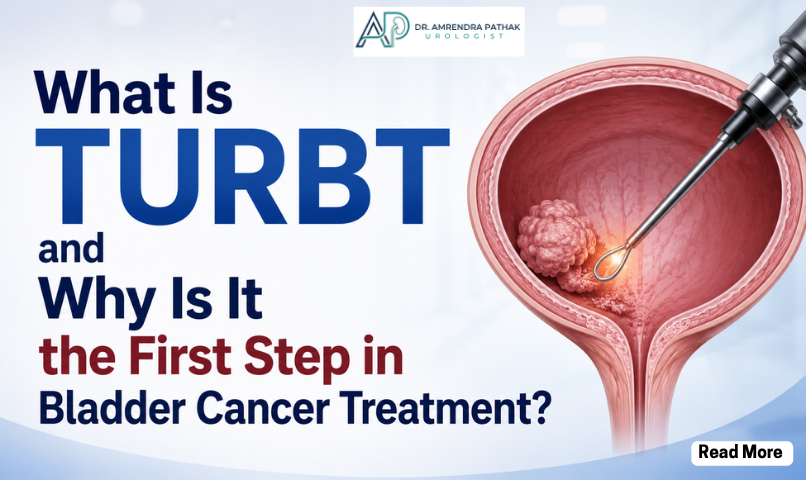
Hearing the words "bladder cancer" is overwhelming enough without also being handed a medical term like TURBT right after. If your doctor has recommended one, take a breath — this isn't some extreme or last-resort surgery. In fact, it's usually the very first, most essential step in figuring out exactly what you're dealing with and how to treat it properly.
Let's break down what TURBT actually is, why it comes before almost everything else, and what you can expect if it's on your calendar.
What Does TURBT Stand For?
TURBT stands for Transurethral Resection of Bladder Tumor. In simpler words, it's a procedure where a surgeon removes an abnormal growth or tumor from inside the bladder, using an instrument passed through the urethra — meaning there are no external cuts or incisions involved.
The surgeon uses a thin, lighted tube called a cystoscope, along with a small wire loop, to view the inside of the bladder and shave away the tumor tissue layer by layer. It's done under anesthesia, and most people go home the same day or after a short hospital stay.
Why Is TURBT Almost Always the First Step?
Think of TURBT as doing two jobs at once — it's both a diagnostic tool and a treatment.
1. It confirms the diagnosis. A scan can show that something looks abnormal in the bladder, but only a tissue sample examined under a microscope can confirm whether it's actually cancerous, and if so, what type and grade it is.
2. It tells doctors how deep the cancer has grown. This is arguably the most important reason TURBT comes first. Bladder cancer treatment decisions depend heavily on whether the tumor is "non-muscle invasive" (still in the inner lining) or "muscle invasive" (grown into the deeper bladder wall). TURBT is the only reliable way to know this for certain.
3. It removes the visible tumor. In many early-stage cases, TURBT doesn't just diagnose — it removes the entire visible tumor, which can be genuinely curative on its own for superficial cancers.
4. It shapes every decision after it, whether you'll need additional treatments like chemotherapy inside the bladder, immunotherapy, radiation, or, in more advanced cases, removal of the bladder itself — all of this is decided based on what TURBT reveals.
Because so much depends on getting this first step right, many patients specifically look for the Best Bladder Cancer Treatment in Old Rajendra Nagar. Where experienced urologists ensure the resection is thorough, and the diagnosis is accurate from day one.
What Happens During the Procedure?
You're given general or spinal anesthesia, so there's no pain during the surgery itself.
A cystoscope is passed through the urethra — no external incision is needed.
The surgeon carefully removes the tumor along with a bit of the underlying muscle layer, which is important for accurate staging.
The tissue is sent to a lab for detailed pathology testing.
A catheter is often placed temporarily to help drain the bladder and flush out any residual blood.
Most people are back home within 24 to 48 hours, with some mild discomfort or blood in the urine for a few days afterward.
What Happens After TURBT?
Once the pathology report comes back, your doctor will explain exactly what type of bladder cancer you have and, more importantly, what stage it's at. This conversation is genuinely one of the most important ones in your entire treatment journey, because it decides everything that follows:
Low-grade, non-invasive cancers may only need regular monitoring with cystoscopies and sometimes a single dose of chemotherapy inside the bladder right after surgery.
Higher-grade or recurrent cancers may need a course of intravesical BCG immunotherapy.
Muscle-invasive cancers usually require more aggressive treatment, which could include chemotherapy, radiation, or surgery to remove part or all of the bladder.
This is exactly why patients are advised to have their TURBT performed at a centre offering the Best Bladder Cancer Treatment in Old Rajendra Nagar — accurate staging at this very first step directly affects survival outcomes and future quality of life.
Is TURBT a One-Time Procedure?
Not always. Bladder cancer, especially the non-muscle-invasive type, tends to recur. Because of this, many patients undergo repeat TURBT procedures over months or years, paired with regular cystoscopic surveillance, to catch any regrowth early. This is completely normal and doesn't mean the first surgery failed — it simply reflects how this particular cancer behaves.
Why Choosing the Right Hospital for TURBT Matters
Since TURBT lays the foundation for your entire treatment plan, the skill and thoroughness of the surgeon truly matter. An incomplete resection can lead to inaccurate staging, which can affect everything from your treatment plan to your long-term prognosis. This is why so many families actively search for the Best Bladder Cancer Treatment in Old Rajendra Nagar. Prioritising experienced urologic oncology teams over convenience alone.
The Bottom Line
TURBT might sound intimidating as a term, but at its core, it's simply the essential first chapter in your bladder cancer story — the step that tells your doctors exactly what they're up against and how best to fight it. If you or a loved one has been advised to undergo this procedure, seek care at a centre known for the Best Bladder Cancer Treatment in Old Rajendra Nagar. can make sure this crucial first step is done right, giving every treatment decision afterward the strongest possible foundation. With accurate diagnosis, a skilled surgical team offering the Best Bladder Cancer Treatment in Old Rajendra Nagar. and consistent follow-up, most bladder cancer patients go on to have very manageable, well-controlled treatment journeys.
FAQs
1. Is TURBT a major surgery?
No, it's a minimally invasive procedure done through the urethra with no external cuts.
2. How long is the hospital stay for TURBT?
Usually just 1–2 days, sometimes even a one-day procedure.
3. Is TURBT painful?
It's done under anesthesia, so there's no pain during the procedure itself.
4. Can TURBT cure bladder cancer completely?
For early, non-invasive cases, it can be curative on its own.
5. Will I need more treatment after TURBT?
It depends on the stage and grade found in the pathology report.