




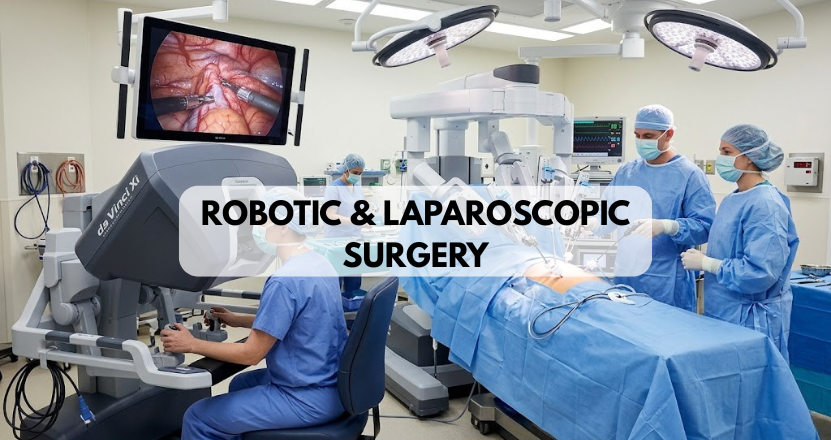
Robotic and laparoscopic surgery are modern surgical techniques that allow doctors to perform complex procedures through small incisions instead of large cuts.
- Laparoscopic Surgery uses a thin camera (laparoscope) and specialized instruments inserted through tiny incisions.
- Robotic Surgery enhances this approach by using robotic arms controlled by the surgeon, offering greater precision, flexibility, and control.
These techniques have revolutionized urology by making surgeries safer, more accurate, and patient-friendly.
Why Choose Minimally Invasive Surgery?
Traditional open surgery often involves larger cuts, more pain, and longer recovery. In contrast, robotic and laparoscopic surgery offer significant advantages:
Key Benefits
- ✅ Smaller incisions and minimal scarring
- ✅ Less pain and reduced blood loss
- ✅ Faster recovery and shorter hospital stay
- ✅ Lower risk of infection
- ✅ Better surgical precision
This makes it an ideal choice for patients seeking effective treatment with minimal disruption to their daily life.
Conditions Treated with Robotic & Laparoscopic Surgery
These advanced techniques are widely used to treat various urological conditions, including:
- Kidney tumors and cysts
- Prostate cancer
- Bladder disorders
- Ureteric strictures
- Adrenal gland tumors
- Reconstructive urology procedures
With increasing advancements, more complex surgeries are now being performed using these minimally invasive methods.
Robotic Surgery – The Next Level of Precision
Robotic surgery takes minimally invasive treatment to the next level. It allows surgeons to perform highly delicate procedures with unmatched accuracy.
How It Works
- The surgeon controls robotic arms from a console
- A high-definition 3D camera provides a magnified view
- Instruments move with extreme precision, even in tight spaces
Advantages of Robotic Surgery
- Enhanced visualization
- Greater control and stability
- Reduced risk of human error
- Better outcomes in complex surgeries
This technology is especially useful in procedures like prostate cancer surgery and kidney tumor removal.
Laparoscopic Surgery – Proven & Effective
Laparoscopic surgery has been successfully used for many years and remains a reliable option for various procedures.
How It Works
- Small incisions are made in the abdomen
- A camera and instruments are inserted
- The surgeon performs the procedure while viewing on a screen
Benefits
- Minimal pain
- Faster healing
- Cost-effective compared to robotic surgery
- Excellent outcomes for many urological conditions
Expert Care You Can Trust
Advanced surgical technology is only as effective as the expertise behind it. Dr. Amrendra Pathak brings extensive experience in performing both robotic and laparoscopic procedures with a strong focus on patient safety and successful outcomes.
Patients benefit from:
- Detailed pre-surgical evaluation
- Personalized treatment planning
- Use of the latest surgical techniques
- Continuous care from consultation to recovery
This ensures that every patient receives world-class treatment with a personalized approach.
What to Expect Before & After Surgery
Before Surgery
- Detailed medical evaluation
- Imaging tests and diagnosis
- Clear explanation of the procedure
After Surgery
- Short hospital stay (often 1–3 days)
- Minimal discomfort
- Quick return to daily activities
- Regular follow-up for recovery monitoring
Most patients experience a smooth recovery due to the minimally invasive nature of these procedures.
Who is the Right Candidate?
Robotic and laparoscopic surgery may be recommended for patients who:
- Require surgical treatment for urological conditions
- Prefer minimally invasive options
- Are medically fit for surgery
A thorough evaluation helps determine the most suitable approach for each patient.
Why These Techniques are the Future of Surgery
Healthcare is rapidly evolving, and minimally invasive techniques are becoming the standard of care. Robotic and laparoscopic surgery offer:
- Greater precision
- Better patient comfort
- Faster recovery
- Improved long-term results
These benefits make them the preferred choice for both doctors and patients worldwide.